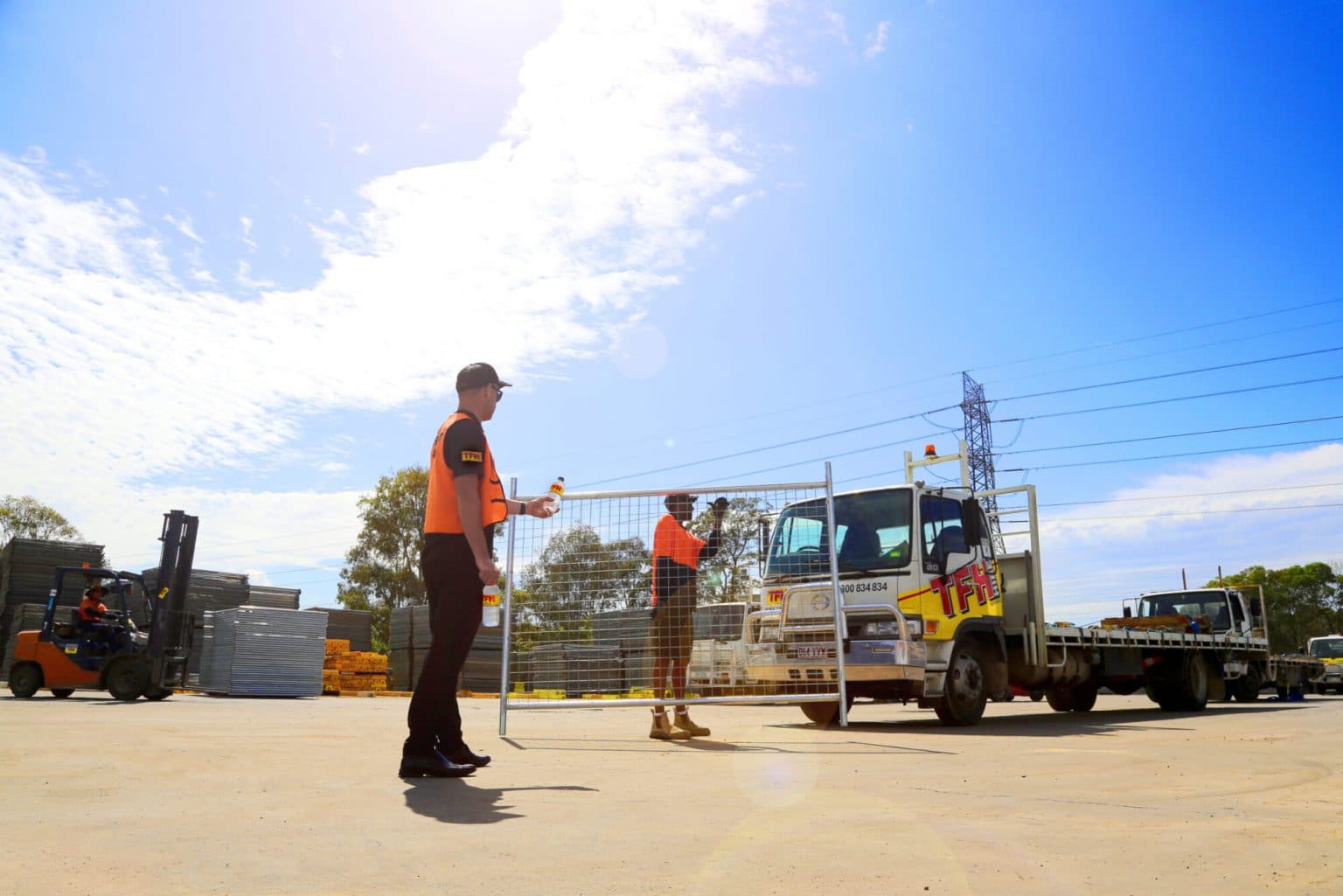
Community projects run on a friendly fallacy: because the work benefits everyone, everyone will be sensible around it. The playground upgrade discovers otherwise by Tuesday, children treat any barrier as apparatus, dogs ignore signage entirely, and the desire line through the works is defended like ancestral territory. Community work needs better fencing discipline than commercial work, delivered on a committee budget, which is exactly the ownership niche.
The public interface rules
Assume climbing. Beside a playground, mesh choice and clean assembly matter doubly: taut panels, full clamp counts, no gaps that admit a determined eight year old. The setup guide is the working bee's induction.
Respect the desire line. People walk where they always walked. The diversion around the works must be genuinely convenient, continuous, pram passable, lit, or it will be ignored through whatever gap can be made. Design the route first, then fence to protect it.
The neighbours are the stakeholders. On council adjacent work, complaints flow straight to the funder. Banner mesh carrying the project story turns the fence from imposition into communication, and the noise reduction barrier on residential edges buys tolerance by the decibel.
The environment is conditioned. Parks drain to creeks and approvals name trees: TPZ packages answer vegetation conditions, and the drainage side of the site gets its sediment controls per the approval.
The community kit
A typical playground or hall project runs on: a fence package sized to the work area (the calculator converts the sketch), braces for the exposed run, safety mesh for the daily hazards inside, cones and a barrier board for the car park edge, a lock, and a toilet for the crew. For council owned venues that host repeated works and events, the kit is a purchase that serves every future project, the ownership maths work hardest for exactly this repeat, modest scale profile.
Two hard rules that outrank the budget
Water inside the boundary, a pool at the aquatic centre upgrade, means dedicated pool compliant barrier product; site mesh is legally not a pool barrier anywhere. And works touching public roads run under accredited traffic management, the committee's cones handle the car park, not the street.
The permit inversion
Community projects assume public purpose softens public land rules; it does not. Occupying footpath or reserve needs the council process regardless of whose project it is, per the compliance guide, and the conditions, pedestrian management, insurance evidence, get audited with particular care precisely because the public is close.
Kit the project
Everything ships Australia wide, freight at checkout: browse the range, or ask us to size the kit from the working drawing.