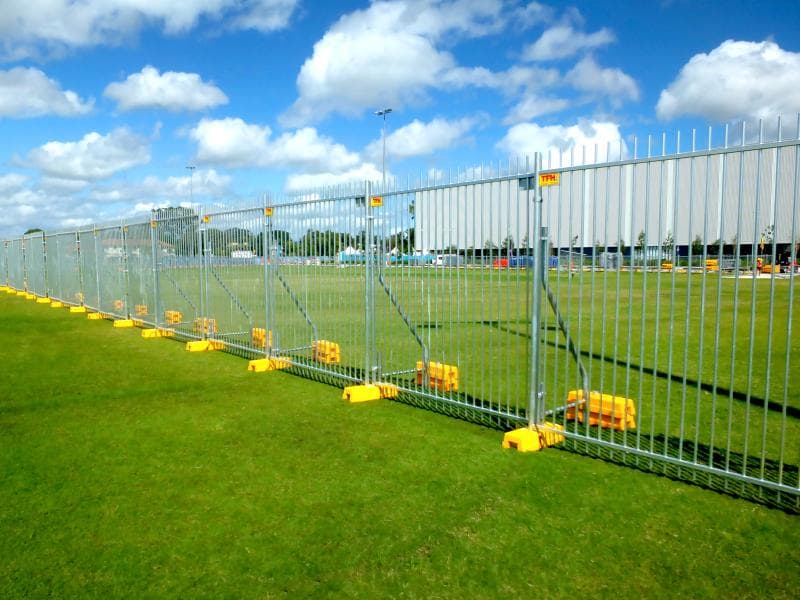
When you hire a fence, the supplier carries part of the compliance story for you. When you own one, the whole story is yours: the duty, the standard, the permit and the maintenance all attach to the person who deployed the panels. Since Site Direct customers are owners, this guide is written for the owner's seat.
The duty: yours, wherever the fence stands
Work health and safety law places the duty on whoever conducts the business or undertaking: protect workers and the public, so far as is reasonably practicable. Deploying your own fencing does not dilute this, it concentrates it. The questions an incident investigator asks an owner are direct: was the barrier adequate for the risk, was it maintained, who checked it?
The practical translation: fence to the risk, not to the metre count. A quiet yard boundary and a footpath frontage outside a school need different treatments from the same panels, more bracing, tighter access discipline, better visibility on one than the other.
The standard: AS 4687 and what owners owe it
AS 4687 covers temporary fencing as equipment: construction, dimensions, stability under wind. For owners the standard has a sharp implication, compliance is a property of the assembled, maintained system, not the receipt. Panels installed without clamps, corners without braces, covered runs without extra ballast: each is a departure from the system the standard describes, whoever manufactured the parts.
The setup guide is effectively the compliance manual: sequence, clamping, bracing, and the wind rule that covered mesh needs re engineering. Owners should also inspect at every redeployment, damaged components out of rotation, because a bent panel is not the equipment the standard measured.
The permit: councils and public land
The rule is location, not ownership: fencing wholly on private property generally needs no permission; fencing on or over public land, footpath, verge, road reserve, needs the local council's, with fees, insurance evidence and pedestrian management conditions that vary by council. Owners doing repeat metro work should learn their home councils' processes once and template the application, the lead time is the sting, and it is avoidable with practice.
The special cases that outrank everything
- Pools. Standard mesh fencing is not a pool barrier under any circumstances, pool barriers answer to AS 1926.1, a different standard and product class entirely. If your project involves water, source compliant pool barrier product; do not improvise with site mesh.
- Roads. Work affecting live traffic runs under state traffic management schemes with accredited planning. Your cones and barrier boards implement such plans; they do not replace them.
- Trees. Vegetation protection conditions name fencing specifically, which is what TPZ packages exist for.
The owner's annual checklist
- Walk your stored stock yearly: panels straight, blocks intact, clamp and brace counts real
- Re read your council's occupation permit process before the season starts
- Check attachments policy: any banner or shade cloth plan means a bracing plan
- Keep purchase records, they are the start of your compliance file
Equip properly
Packages with correct component ratios, components to keep owned systems complete, shipped Australia wide with freight priced at checkout. Questions: contact us or start with the FAQ. This guide is general information; regulators and councils are the authorities.