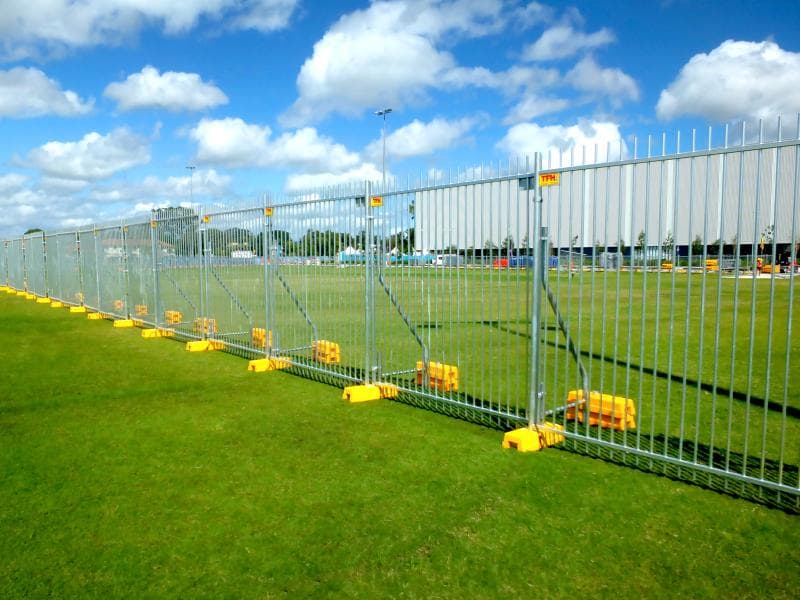
There is a species of project cost that never appears on a quote: the working hours lost when the neighbours organise. Noise complaints escalate on a well known ladder, fence line grumble, council call, inspection, conditions, restricted hours, and every rung reprices the programme. The noise reduction barrier exists to keep projects off the ladder, and unlike most acoustic treatments, it is a product a repeat builder can simply own.
How it works
Acoustic panels mount to standard temporary fencing, converting an acoustically transparent mesh line into a barrier with mass and absorption. Sound from the site partly absorbs, partly reflects back toward the source; the neighbour's side measures quieter. Two placement rules drive the result:
- Wrap the source, not just the boundary. Panels close around the noise, the saw station, the compressor, the generator, outperform the same panels strung along a distant fence line. Treat the loud thing first.
- Beat the sightline. Sound diffracts over barriers, so wherever a neighbour's window overlooks the work, height decides effectiveness. A barrier they can see over is half a barrier.
What the owner gets back
Hours defended. Councils grant extended and weekend hours far more readily, and defend them against complaints far longer, when a site demonstrates real noise controls.
Complaints pre empted. The visible effort changes the neighbour conversation before it starts, and changes the inspector's tone if it happens anyway.
A calmer site inside. The crew beside the plant gets the same attenuation, and instructions become audible again.
Screening for free. An acoustic panel is also a solid visual barrier: dust and sightlines improve alongside the decibels, the three complaint streams answered by one product.
The wind bill, payable in advance
Acoustic panels turn breathable mesh into solid surface, the sail conversion, at real mass. The setup guide's covered run rules apply in full: braces on the treated stretches, extra block ballast at ends and corners, and exposure judged honestly. Engineer the run for the panels before they go on; the retrofit after a windy night costs more and reads worse from next door.
Who should own rather than hire
The builder or landscaper whose work is chronically residential, infill, renovations, subdivision edges, faces the neighbour problem on every job. Owned panels deploy on each site for the cost of handling, per the general ownership maths, and store flat between jobs. The single project with one loud month remains a fair hire case.
Deploy it well
Site plan, loudest activities, nearest windows: those three facts place the panels. Pair with the construction perimeter fundamentals, and order through the catalogue or ask us, Australia wide, freight at checkout.