A construction perimeter does its most important work at 3am on a Sunday, when nobody is there to watch it do so. For crews who own and run their own fencing, small builders, landscapers, civil teams, that unattended reliability is a discipline you build, not a service you bought. Here is the owner's version of perimeter safety.
The four exposures your fence answers
- Uninvited entry: shortcut takers, curious children, opportunists. All legally foreseeable, which makes the barrier legally expected.
- Public proximity to hazards: open excavations, stored materials, plant. The fence line sets the standoff.
- After hours risk: the site is most dangerous empty. The perimeter, plus a locked access point, is the after hours safety system.
- The vehicle edge: wherever site and public traffic share a boundary, delineation and barrier equipment supplement the mesh, covered in traffic equipment.
Build it as a system
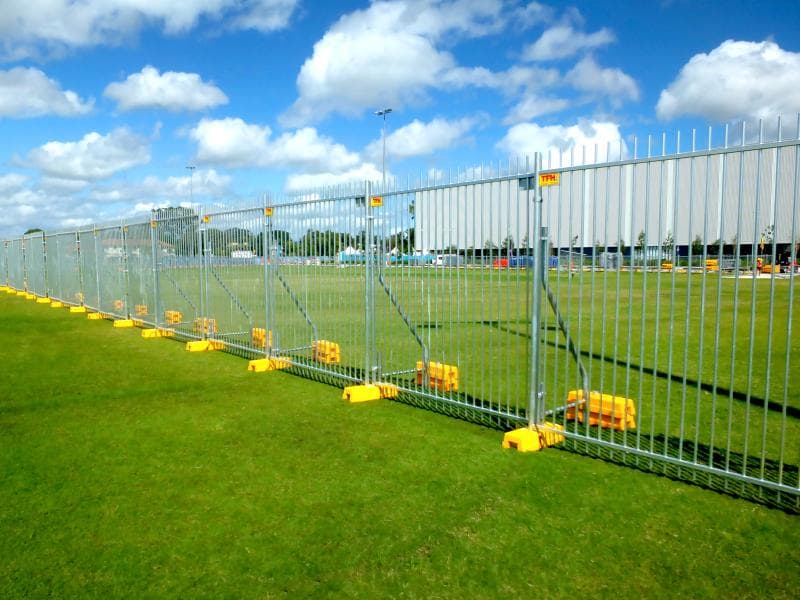
A run of 2.4m mesh panels becomes a safety barrier through its components: blocks seating every joint, clamps at every junction, braces at ends, corners and exposure. The setup guide sequences it; the compliance guide explains why the assembled system, not the parts receipt, is what regulators measure.
Maintain against the four failure modes
Owner run fencing fails in the same four ways hired fencing does, minus the supplier who might catch it:
- Wind versus covering. The day banner mesh or shade cloth goes on is the day the bracing plan changes. Covered runs sail; plan the ballast with the covering.
- The propped gate. Whatever access format you build, the rule is behavioural: closed behind every use, locked behind every day.
- Junction gaps. Fence meets building, neighbour, pit: walk the junctions weekly, they open silently.
- Drift. Panels moved for a delivery and returned "later". Later is the failure. Same day is the rule.
The countermeasure is one owned habit: a named person walks the line weekly and after weather, with spare clamps in the ute.
Beyond the mesh
Inside the line, hazards move daily, and safety barrier mesh in 50m rolls is the responsive control: trenches, penetrations, wet works, marked in minutes. Where pedestrians need channelling, crowd control barriers hold the route. Where the approval protects vegetation, TPZ fencing answers the condition. On residential edges, the noise reduction barrier buys working hours in goodwill.
And the standing rule with no exceptions: if water sits inside your boundary, a pool, a completed spa, mesh is not a pool barrier. Dedicated pool compliant product or nothing.
The ownership advantage, used well
Owned fencing means the perimeter can grow the hour the site does, no delivery window, no hire extension call. It also means the discipline is all yours. Stock the spares, walk the line, and the fence does the 3am shift without incident, for years of sites.
Equip or restock
Packages and components ship Australia wide, freight at checkout. The site checklist covers the rest of the kit.