Event sanitation planning has a reputation for being mysterious, and it is not. It is three pieces of arithmetic, one placement exercise and a servicing schedule, plus, for venues that host repeatedly, a purchasing decision most committees never realise they are allowed to make.
The arithmetic
Three inputs set the toilet count:
- Peak simultaneous attendance, not total tickets, the crowd present at the busiest moment
- Duration, with requirements stepping up past the few hour mark and again for multi day formats
- Licensing, because alcohol reliably multiplies demand, every planning rule of thumb scales up when bars open
The fourth input outranks the other three: the permit. Councils commonly mandate minimum ratios including accessible provision, so read the conditions before buying or booking anything.
The placement exercise
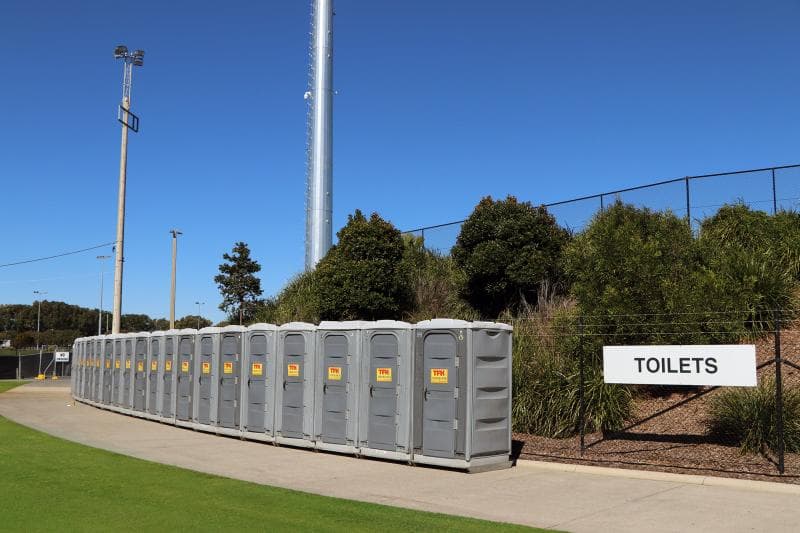
Banks beat scatter, every time: clustered units clear queues faster, service in one truck stop, and light with one tower. Put banks where people concentrate, near food, bars and exits, offset so toilet queues stay clear of main flows, on routes a service vehicle can reach mid event, and lit, an unlit bank after dark is out of service regardless of condition. Accessible units go in every bank on step free routes, not in one distant corner of compliance.
The servicing schedule
Single day events: stocked at delivery, dealt with after. Anything longer needs a service window in the quiet hours and consumable restocks, an out of paper unit counts as a failed unit in every attendee's review. Venues without sewer access arrange pump out with a local waste contractor on the same calendar as the event itself.
The ownership angle for recurring venues
Here is the decision most committees miss: showgrounds, sporting clubs, market sites and church grounds that host events repeatedly are hiring the same units annually, forever. Owned units, the PT-360 Standard as the workhorse, PT-380 or PT-390 where amenity matters, Redloos ex hire stock for value expansion of the bank, pay back across a couple of seasons per the standard buy versus hire maths, then serve every future event for the cost of servicing. Storage between events is a shed corner; the units are built to be moved.
One honest boundary: a one off festival needing dozens of units plus contracted servicing is a hire job, ownership suits the venue with a recurring, sizable but not enormous requirement.
Water completes the provision
Hand washing near food, drinking water everywhere: the water hub covers bulk supply on unserviced grounds and a bubbler serves the permanent site, per the hydration setup guide.
Plan the rest of the event
Sanitation slots into the wider method: the 11 step planning guide, fencing selection and crowd barriers. Units and water gear ship Australia wide, freight at checkout: browse the range or ask us.