First events fail in a pattern so consistent it could be laminated: the fun decisions get made early (theme, band, food trucks) and the structural ones late (permits, toilets, what happens when it rains), by which point they are emergencies with invoices attached. The cure is sequence. Eleven steps, in order.
1. Write the one page facts sheet. Expected attendance, audience, hours, licensed or dry, ticketed or open, wet weather call. Agree it, freeze it, and make every later decision answer to it.
2. Map approvals before booking anything. Council event permits, liquor licensing, food registrations, noise conditions, traffic requirements. Their lead times set your real timeline, and their conditions will redesign a plan made without them. Boring, skippable, fatal to skip.
3. Pick ground that can host the plan. Truck access, drainage, power, water, neighbours. Walk it with the facts sheet, not the photographer.
4. Draw the site plan and crown it. Gates, fence lines, stages, toilets, food, first aid, egress, vehicle routes: one drawing, kept current, that every supplier and volunteer works from.
5. Design the crowd's whole day. Arrive, queue, enter, circulate, leave, plus the emergency version of each. Queue space at gates is the classic first timer under allocation; the crowd barrier guide holds the arithmetic.
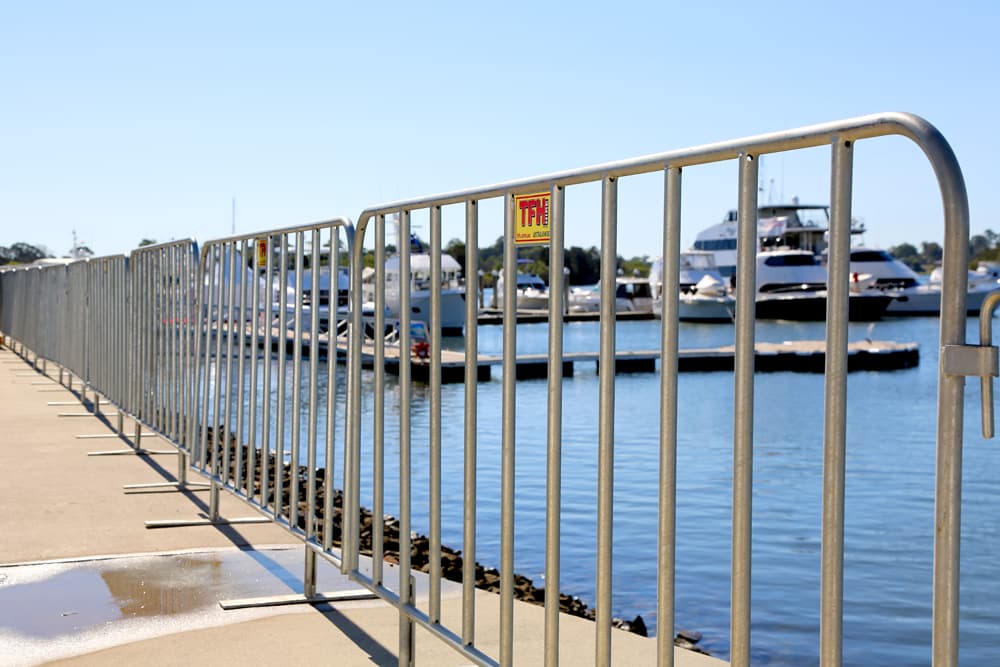
6. Assign every boundary a job. Resisting boundaries get fence packages; shaping boundaries get barrier packages; the selection guide sorts them, and recurring events should read the ownership maths before hiring anything.
7. Order infrastructure early and together. Fencing, barriers, toilets, water, banner mesh, cones and boards for the car park: one order, one freight, sized by the sanitation numbers. Owned kit assembles on your schedule, the setup guide is the manual.
8. Solve the vehicles on paper. Parking, drop off, accessible spaces, vendor access, and every point where wheels meet feet, marked and controlled per the traffic equipment grammar.
9. Write the emergency plan against the real drawing. Egress at actual fence openings, assembly areas that exist, a weather trigger with a name and a phone attached.
10. Brief everyone with the map in hand. Twenty minutes, the site plan, who decides what. Unbriefed volunteers improvising is where event stories come from.
11. Walk it at dawn. Gates, latches, egress clear, signage up, toilets stocked, barriers where the plan says. One hour, and the day starts known instead of hoped.
The purchases that survive the event
First time organisers discover a happy fact at pack down: the fencing, barriers, toilets and water gear are still theirs. Event two costs freight from the shed, which is why steps 6 and 7 lean toward buying. Browse the range, or ask us to size a kit against your site plan.