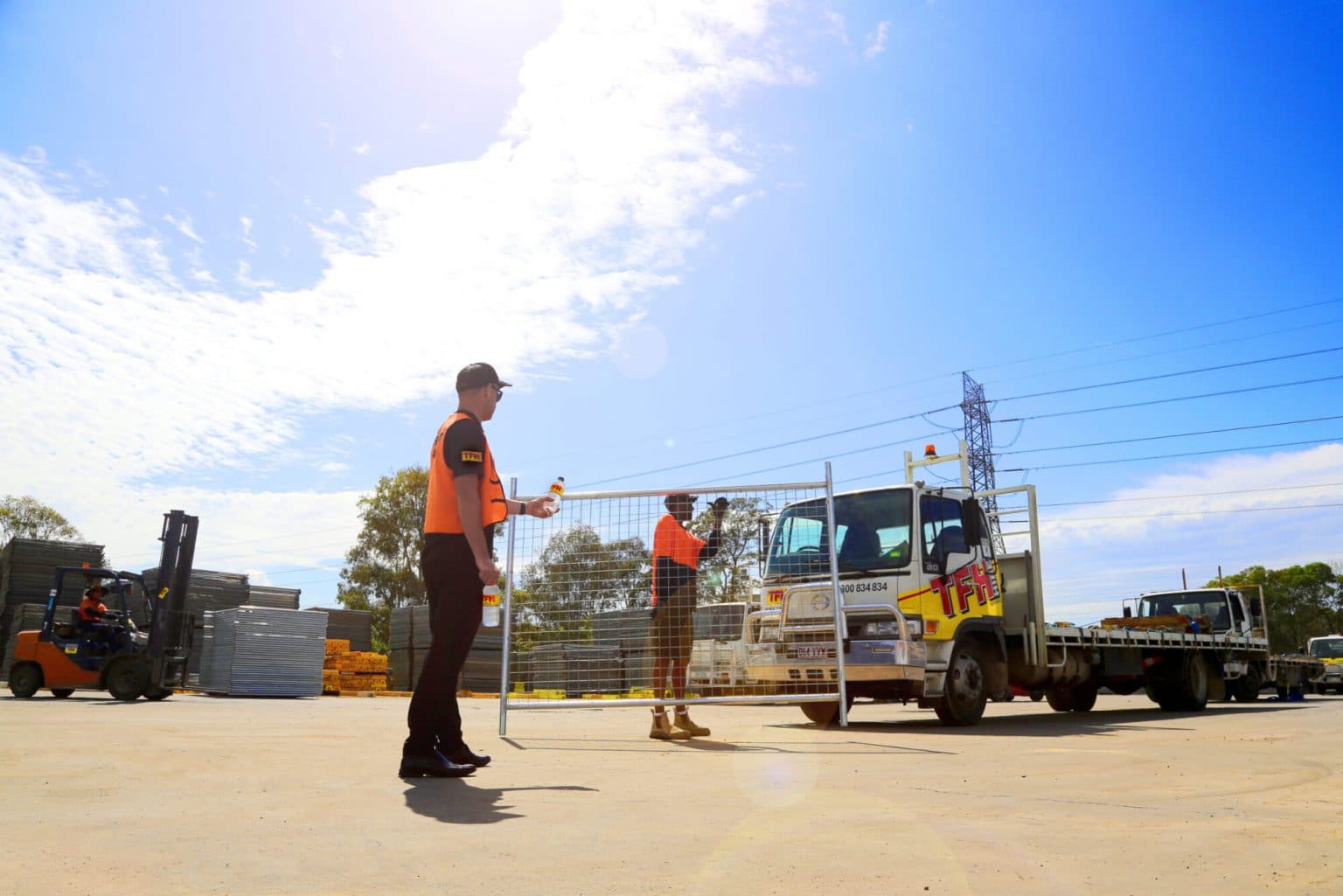
Every industry has its stress test event, the moment demand, deadline and visibility peak together and every weakness in the system gets found at once. For Australian temporary fencing, that was the Gold Coast 2018 Commonwealth Games: almost 22,000 metres of security fencing across a distributed venue footprint, supplied by the TFH family of businesses as official supplier, built and struck on dates that could not move.
The industry learned things at that scale worth passing down, including to buyers who will never fence anything larger than a carnival.
Lesson one: uniformity is a superpower
Games equipment moved between venues as areas changed function mid event, which only works if every panel couples with every other panel. One specification across tens of thousands of components turned out to be the single most valuable property of the entire supply.
The buyer's version is direct: build your owned kit from consistent product. A fence package whose panels, blocks and clamps are one matched system will still be one system when you extend it next year. The mixed bag assembled from four sources over four years is where field problems live.
Lesson two: the strike is half the contract
Games venues reverted to public use on published dates, and late removal was as visible a failure as late installation. The industry internalised that a perimeter's lifecycle, up, operated, down, is the deliverable, not the metres.
For self managed events the translation is planning the pack down with the same care as the setup: the event guides sequence both directions, and owned kit means the strike crew is your crew, on your schedule.
Lesson three: perimeters are systems of people and steel
At Games scale, fencing was part of the accreditation and security regime: the steel defined where the humans checked credentials. Every ticketed event inherits the miniature version, the fence line and the gate crew are one system, designed together, per the festival perimeter guide.
Lesson four: capacity depth matters exactly once, totally
The Games consumed fleet at a scale only manufacturing depth could back, and the industry sorted visibly into suppliers who could commit at scale and suppliers who could promise at scale. Most buyers never need that depth, which is itself the lesson: the carnival sized requirement is well inside what an owned kit covers, and the mega event remains the hire fleet's natural territory. Knowing which side of that line your event sits on is the planning decision that precedes all others.
The inheritance
GC2018's operational DNA, uniform systems, lifecycle thinking, gate and fence integration, filtered into ordinary Australian event practice, and into the guides on this site. The equipment is the value tier expression of the same principles: consistent systems, honestly scoped, for the events and sites that are most of the industry's actual work.
Browse the range or start with the event fencing guide.