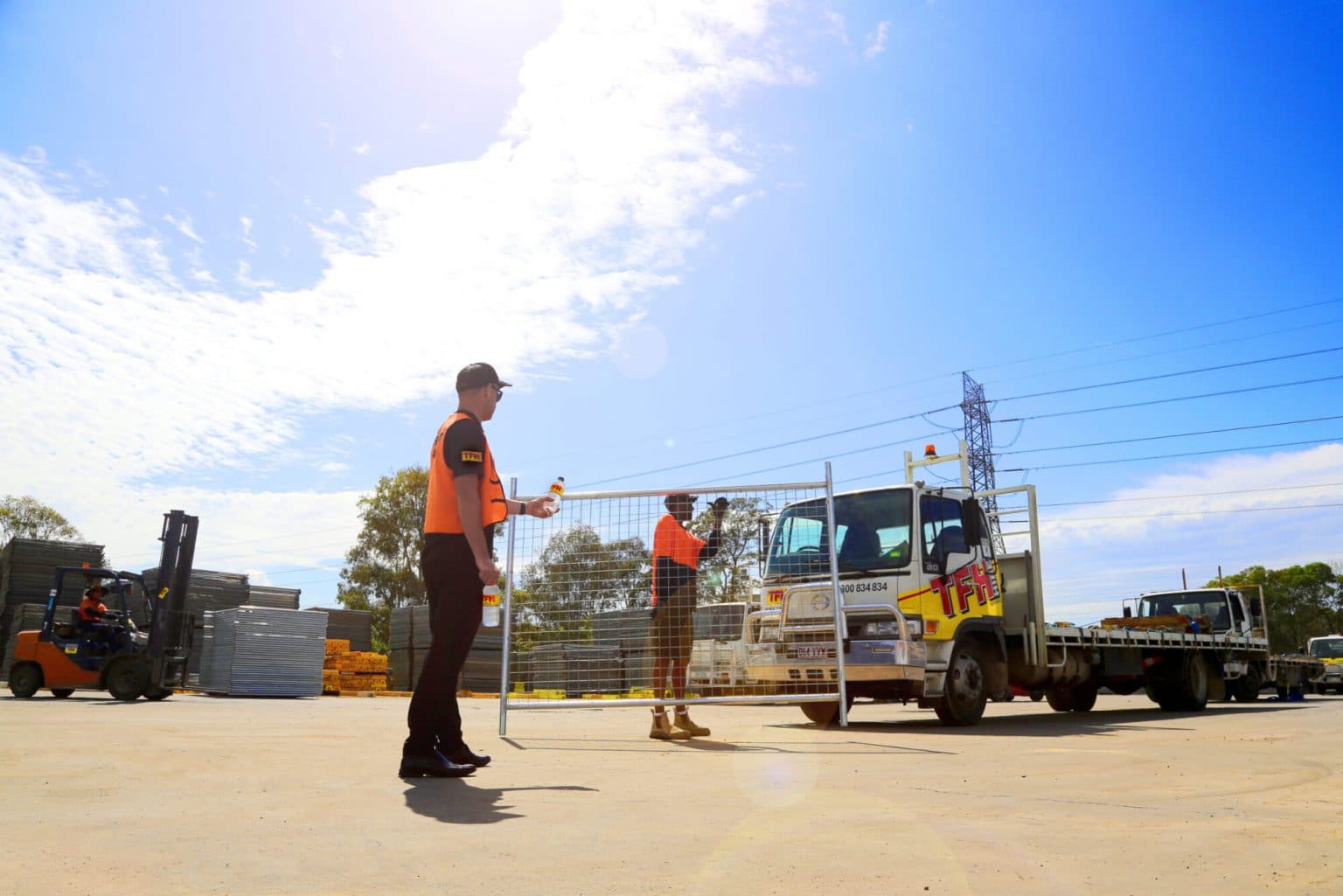
Most serious site incidents involving vehicles share an autopsy finding: the vehicle and the person were both exactly where they expected to be, and nobody had noticed those places overlapped. Traffic management is the practice of finding the overlaps before physics does, and for crews running their own sites it is a method you can learn in an afternoon and apply forever.
The conflict point method
Take your site plan, or an aerial photo, and draw two sets of lines: everywhere vehicles go (entry, travel, reversing, delivery staging, exit) and everywhere people walk (gate to shed, shed to work face, the public footpath past the frontage). Every place the lines touch is a conflict point, and the method is simply: every conflict point gets a named control.
The controls come in escalating firmness:
- Separation by design: move one of the lines. The free option, and the best, relocate the walkway, reroute the reversing, stage deliveries where nobody walks.
- Marking: safety barrier mesh and cones making the boundary visible where flows run parallel
- Channelling: crowd control barriers building a protected pedestrian route where separation by design is impossible
- Exclusion: barrier boards closing routes entirely during high risk operations, the pour, the crane day, the excavation edge
The full equipment grammar, warn, guide, exclude, lives in the traffic equipment guide.
The boundary cases that outrank the method
Where your site touches a public road, the state traffic management scheme applies: accredited planning, compliant devices, formal approval. Your kit implements such plans; it cannot replace them. And where the risk assessment concludes a vehicle must be physically stopped rather than informed, that is engineered barrier territory beyond delineation entirely. Knowing where your authority ends is part of the competence.
The disciplines that keep it working
- Re walk after every site change. New stage, new gate, new excavation: the lines moved, so the conflict points did.
- Check it at night if anyone works or walks after dusk, reflectivity is the difference between equipment and clutter.
- Put it back. Controls moved for a delivery return the same hour. A borrowed barrier is a deleted control.
- Brief the new starters. The plan lives in heads; heads change.
- Treat near misses as bug reports. The reversing ute that surprised someone is the system telling you where it is broken, free of charge, once.
Why the effort compounds
Sites with real traffic management run faster, not slower: deliveries stage instead of blocking, plant moves without improvised spotting, and the public frontage generates no complaints. The discipline pays for its own equipment inside a season.
Build the kit
Cones, boards, mesh and barriers ship Australia wide, freight at checkout: browse the range, size it against the site checklist, or ask us.