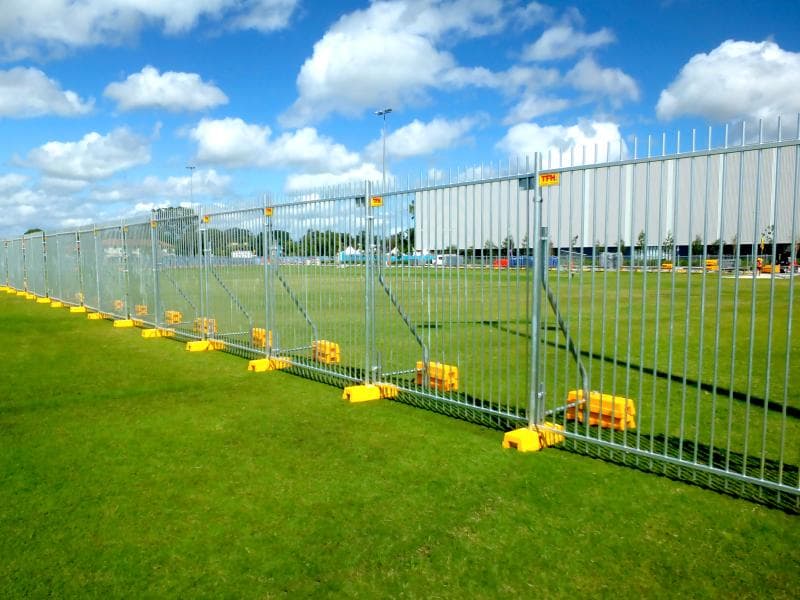
Risk management sits at the heart of every major project. While much of your attention goes to logistics and delivery, one of the largest exposures you carry — and one of the clearest legal duties — is the physical security of your worksite. In Australia, that responsibility begins with compliant temporary fencing. It isn't merely a boundary marker; it's a core element of your Work Health and Safety (WHS) strategy, protecting the public, your workforce, and your business from serious financial and legal consequences.
There is no margin for error. Here is a practical guide to the standards and regulations every site operator needs to understand.
Understanding the Standard: AS 4687-2022
The benchmark for temporary fencing in Australia is AS 4687-2022. This is the industry's definitive reference, and at Site Direct we supply equipment engineered to meet or exceed its requirements. The standard tests the performance of the complete fencing system, with strict expectations for:
- Structural Strength: Panels must be capable of withstanding real-world loads, including significant wind exposure and incidental impacts common on a busy site.
- System Stability: Specifications cover components such as fence feet and couplers so the entire assembly stays upright and stable, even in adverse weather.
- Engineered Bracing: Across long fence runs or high-wind locations, additional bracing isn't optional — it's a mandatory safety requirement to keep the barrier sound.
Using fencing that falls short of this standard is both a compliance failure and a serious safety risk.
Construction and Civil Sites: A Clear Legal Duty
In every Australian state, WHS legislation is direct: every active construction and civil worksite must be enclosed with secure temporary fencing. Your statutory duty of care requires a controlled environment that mitigates risk.
The core purposes of the rule are:
- Preventing Unauthorised Entry: A solid perimeter is your first defence against public intrusion, keeping people clear of hazards such as open trenches, moving plant, and overhead work.
- Protecting Assets: A secure boundary is a strong deterrent against theft and vandalism, safeguarding plant and materials around the clock.
The penalties for non-compliance are significant. Businesses can face fines of up to $250,000 for inadequately securing a site. Regulators can also issue stop-work orders, halting an entire project and inflicting major financial and reputational damage.
Specialised Fencing: Events and Pools
The need for high-quality, compliant fencing extends well beyond the construction zone.
- Events and Crowd Control: For sporting events, festivals, and large community gatherings, fencing is critical infrastructure. It manages crowd flow, maintains emergency vehicle access, secures licensed areas, and protects backstage zones. In many cases, a documented fencing plan is required for council permits and public liability cover.
- Pool Safety: Pool fencing rules under AS 1926.1-2012 are among the strictest in the country because they're aimed at preventing child drownings. Requirements are absolute: a minimum height of 1.2 metres, non-climbable design, gaps no greater than 10 cm, and reliable self-closing and self-latching gates. Penalties for non-compliance can exceed $5,500.
Site Direct: Quality You Can Stand Behind
Compliance isn't a tick-box exercise — it's the foundation of a strong safety culture and the integrity of your project. Site Direct supplies temporary fencing built for Australian conditions, with products engineered against the relevant standards so that what you buy meets the brief on day one and every day after.